 By Bemi Brooks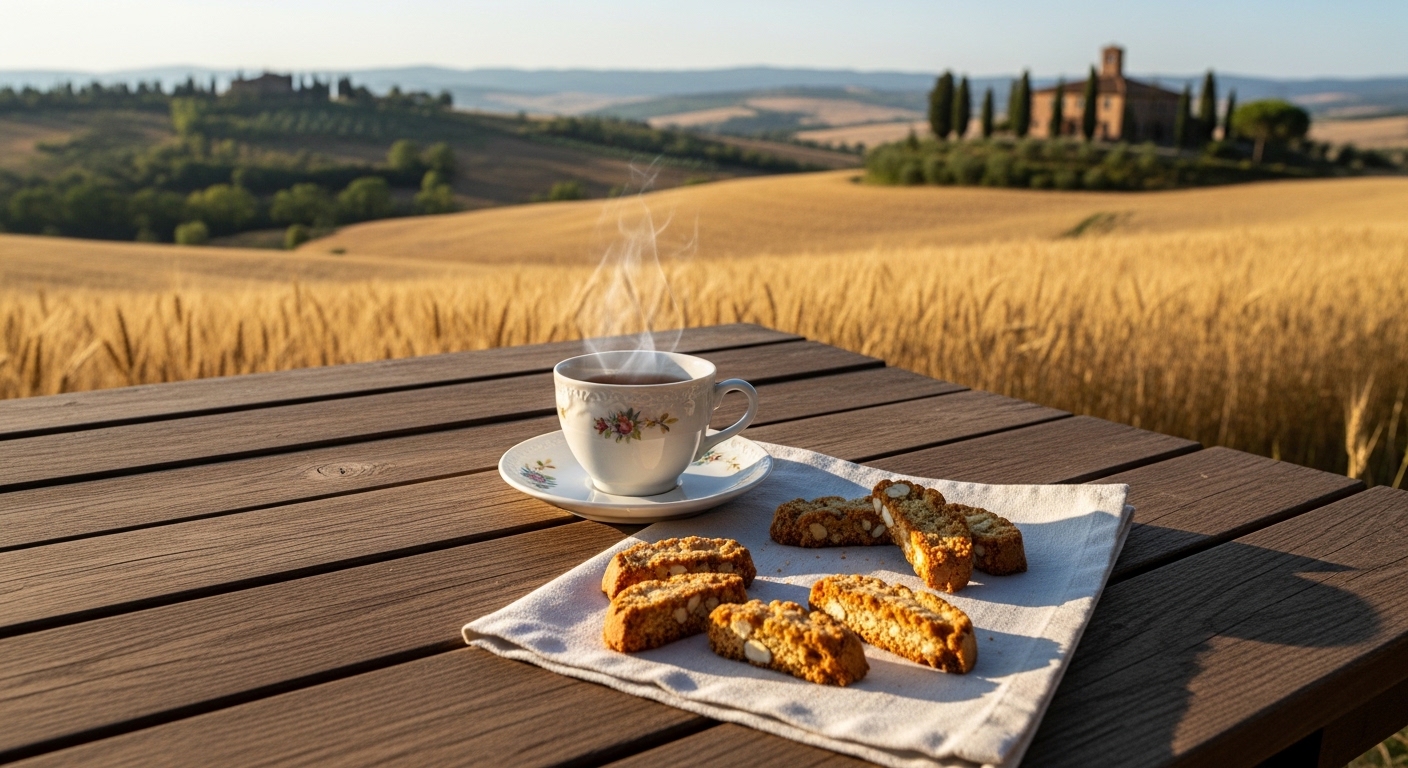
Have you ever been sitting in a cozy coffee shop, noticed those perfectly crunchy almond cookies lined up in a jar, and wondered why they are so satisfying to dunk into your drink? You know the ones I am talking about. They are golden brown, packed with almonds, and have that signature crunch that makes a quiet afternoon feel a little more special.
I remember my first encounter with these cookies clearly. I was at a small Italian cafe, and the barista handed me a glass of sweet dessert wine along with a few oblong biscuits. “Dip them,” he said with a wink. That first bite was a revelation. The cookie softened just enough in the wine but kept its structure, releasing a gentle almond flavor that was simple and perfect.
Those cookies were Бишкоти ди Прато. You might know them better as cantucci. They are not just any cookie. They are a piece of Tuscan history, a testament to the idea that the best things in life are often the simplest.
So, What Exactly Are Бишкоти ди Прато?
Let’s break it down. Бишкоти ди Прато translates directly to “Biscuits of Prato.” Prato is a city in Tuscany, Italy, and these cookies are its claim to fame. While many people call them “biscotti” (which technically means “twice-cooked” in Italian), the real name for this specific style from Prato is cantucci.
The magic lies in the simplicity. We are not talking about loaded cookies full of chocolate chips or drizzled with icing. The classic Бишкоти ди Прато recipe is a lesson in restraint.
The Core Ingredients:
- Flour
- Sugar
- Eggs
- Whole almonds (with their skins on)
That is it. Traditionally, there is no butter, no oil, and no vanilla extract. The recipe relies entirely on the quality of the ingredients and the skill of the baker.
The Famous Double Bake
Why are they so hard and crunchy? The name “twice-baked” tells the story. The dough is formed into logs and baked once. Then, the logs are taken out, sliced into individual cookies, and baked again. This second bake dehydrates the cookies, removing almost all the moisture. This is why Бишкоти ди Прато stay fresh for weeks and why they are the perfect companion for dipping.
Think of it like making toast. Fresh bread is soft. But when you toast it, the water evaporates, and it becomes crisp. Now, imagine toasting it twice. That is the science behind your favorite dunking cookie.
The Story Behind the Cookie: A Bite of History
These cookies have a long history, but they were perfected in the 19th century by a man named Antonio Mattei. He founded a bakery called Biscottificio Antonio Mattei in Prato in 1858. He created the definitive recipe that we know today.
Antonio Mattei was a master of his craft. He won awards for his cookies at international expositions, and his bakery became a landmark. To this day, if you visit Prato, you can go to the same bakery and buy Бишкоти ди Прато made using the same methods and the same recipe from over 160 years ago. That is a tradition you can taste.
The cookies became famous because they traveled well. Sailors and merchants would take them on long voyages because the twice-baked nature meant they wouldn’t spoil. They became an emblem of Tuscan baking, representing a culture that values quality, tradition, and simple pleasures.
How to Eat Бишкоти ди Прато the Right Way
If you buy a bag of these cookies, you might just eat them like any other cookie. But to get the full experience, you need to follow the Italian tradition.
The Perfect Pairing: Vin Santo
Бишкоти ди Прато are almost always served with Vin Santo. This is a sweet dessert wine, often described as a “holy wine.” It is usually amber in color and has flavors of dried fruit and honey.
Here is the ritual:
- Pour a small glass of Vin Santo.
- Take one almond cookie.
- Dip it into the wine for just a few seconds. You want it to soften, not dissolve.
- Take a bite.
The contrast is beautiful. The dry, crunchy cookie soaks up the sweet, complex wine. The almond flavor in the cookie talks to the nutty notes in the Vin Santo. It is a combination that has been enjoyed in Tuscany for generations.
Q: Can I dip them in coffee instead of wine?
A: Absolutely. While Vin Santo is the traditional choice, these cookies are fantastic with coffee, tea, or even a cold glass of milk. They are very adaptable to your personal taste.
Making Them at Home: A Simple Guide
You might be surprised to learn that making Бишкоти ди Прато at home is very doable. Because the ingredient list is so short, success depends on technique.
Here is a simple breakdown if you want to try:
- Mix the dry ingredients: Whisk together flour, sugar, baking powder (a modern addition for slight lift), and a pinch of salt.
- Add the wet ingredients: Beat eggs lightly and add them to the dry mix. Traditional recipes use whole eggs, and sometimes an extra yolk for richness.
- Add the almonds: Toss in whole, unpeeled almonds. Mix until a stiff dough forms. It will be sticky.
- Shape the logs: Turn the dough onto a floured surface. Divide it and shape it into flat logs, about 2 inches wide.
- First bake: Place the logs on a baking sheet and bake until they are golden and firm.
- Slice: Let the logs cool just enough to handle. Use a serrated knife to slice the logs diagonally into individual cookies about half an inch thick.
- Second bake: Lay the slices cut-side down on the baking sheet and bake again until they are dry and lightly toasted.
A Quick Comparison: Before and After the Second Bake
To really understand the process, look at what happens to the cookie dough:
| Feature | After the First Bake (The Log) | After the Second Bake (The Cookie) |
|---|---|---|
| Texture | Firm but slightly doughy inside. | Dry, crunchy, and crisp all the way through. |
| Moisture | Retains some internal moisture. | Almost completely dehydrated. |
| Purpose | Sets the shape and cooks the dough. | Creates the signature crunchy texture for dipping. |
| Shelf Life | Would go stale in a day or two. | Lasts for weeks in an airtight container. |
Why This Simple Cookie Endures
In a world of over-the-top desserts, Бишкоти ди Прато remain popular because they are honest. There is no hiding behind heavy frosting or complex flavors. The quality of the almonds matters. The technique of the double bake matters.
When you bite into one, you taste the toasty flavor of the almonds and the light sweetness of the dough. It is a cookie that invites you to slow down. You cannot eat a handful of these quickly. They demand a moment and a drink to accompany them.
Why They Are a Symbol of Tuscany
Tuscany is a region known for its rustic, high-quality food. Think of the crusty bread, the peppery olive oil, and the rich Chianti wine. Бишкоти ди Прато fit right into this picture. They are not fancy or complicated. They are made by hand in small bakeries using local almonds. They represent a culture where food is connected to the land and to history.
Bakeries like Biscottificio Antonio Mattei have protected this legacy. They have kept the recipe the same for over 150 years, ensuring that when you eat their cookies, you are eating the exact same product that won awards in the 1800s.
3 Actionable Steps to Enjoy Бишкоти ди Прато Today
Ready to experience these classic Italian cookies for yourself? Here is how you can dive in:
- Seek Them Out: Look for Бишкоти ди Прато at your local Italian market or bakery. Check the ingredients list. The best ones will have a short list featuring almonds as a star ingredient. If you are feeling adventurous, visit the Biscottificio Antonio Mattei website to see if they ship internationally.
- Buy the Right Wine: Pick up a bottle of Vin Santo the next time you are at a wine shop. It is a dessert wine that is perfect for sipping and dipping. You might also find it at larger grocery stores in the specialty wine section.
- Host a Tuscan Moment: Invite a friend over for an afternoon treat. Pour two small glasses of Vin Santo, arrange a few cookies on a plate, and sit down to talk. Dip, bite, and enjoy. It is a simple act that feels like a mini vacation to Italy.
I would love to hear about your experience. Have you ever tried these cookies before? Do you have a favorite drink to pair with them? Let me know in the comments below.
You May Also Like: Calamariere Explained: The Ultimate Guide to This Seafood Classic
Frequently Asked Questions
Are Biscotti di Prato the same as cantucci?
Yes, they are the same thing. Cantucci is the traditional name for the almond cookies from Prato. Biscotti di Prato simply means “biscuits from Prato.” People outside Italy often call them biscotti, which refers to the method of baking (twice-baked) rather than the specific cookie.
Why don’t traditional recipes use butter?
The lack of butter is intentional. It creates a drier dough that holds its shape during the two bakes. It also ensures the cookie is hard and crunchy, perfect for dipping into Vin Santo or coffee. Adding butter would make them more like a soft American-style cookie.
How should I store them to keep them fresh?
Store them in an airtight container at room temperature. Because they are twice-baked and very dry, they will stay fresh for up to two or three weeks. You should not refrigerate them, as that can introduce moisture and make them soft.
Can I use different nuts or add chocolate?
You can experiment at home, but purists would argue it is no longer Бишкоти ди Прато. The official recipe from Prato uses only whole almonds with their skins. However, modern bakeries often sell variations with pistachios or chocolate chips, but those are usually called “cantucci” with a modifier, not the classic name.
Is Vin Santo the only wine that pairs well with them?
Vin Santo is the classic and most traditional pairing. However, you can also enjoy them with other dessert wines like Moscato or a dry Marsala. For a non-alcoholic option, a strong cup of espresso or a cappuccino is a wonderful choice.
Why are my homemade cookies too hard to bite?
They are supposed to be very hard! That is the point. If they are too hard for you to eat comfortably without dipping, you might have baked them a minute too long. Next time, check them a little earlier during the second bake. You want them dry and golden, not dark brown.
Where can I buy authentic Biscotti di Prato?
If you cannot get to Prato, Italy, look for high-quality Italian import stores. Check the label for the name “Antonio Mattei” if you want the most historic brand. Many good bakeries also make their own version, so ask at your local artisan bakery.