 By Bemi Brooks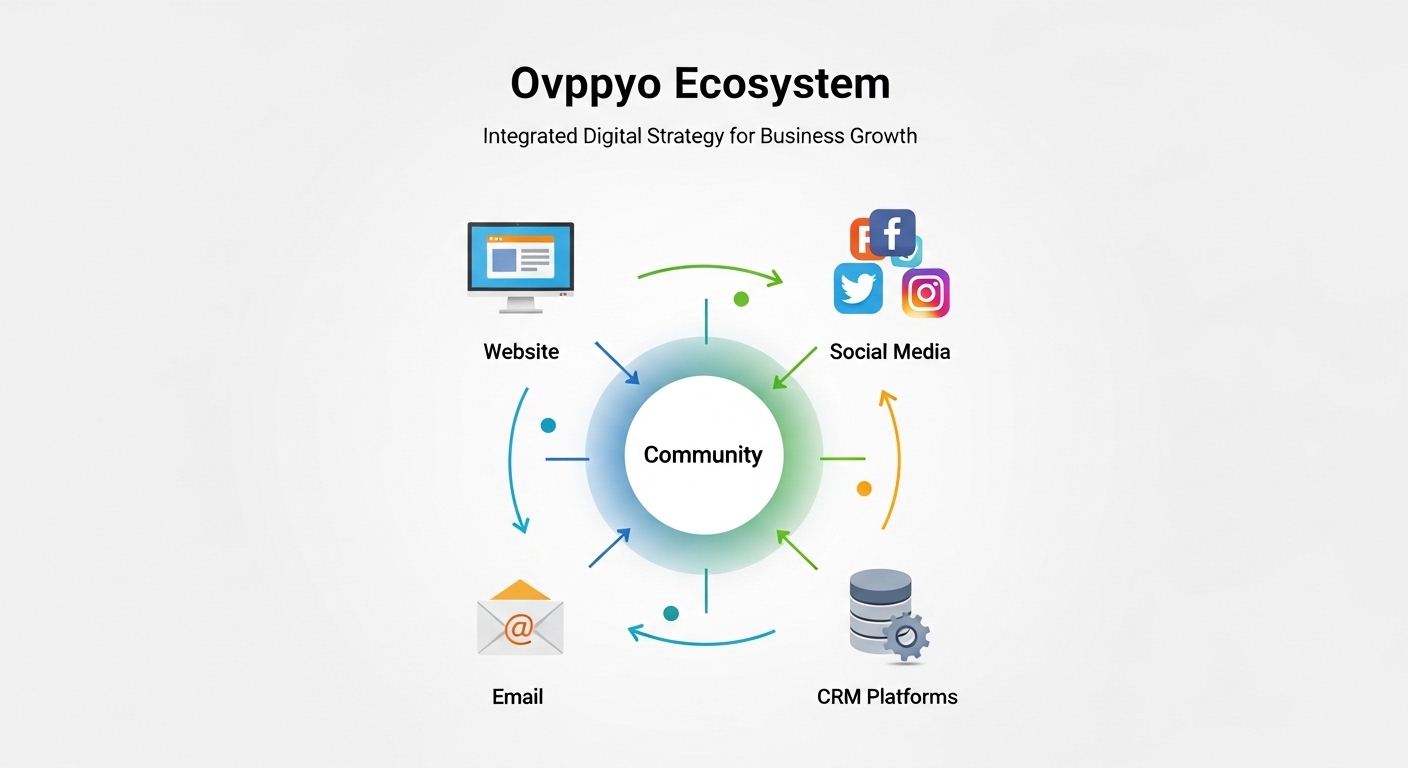
Imagine this: you are pouring budget into social media ads, your website looks sleek, and your content calendar is full. Yet, your growth feels stuck. You are getting likes, but not loyalty. You are getting clicks, but not customers. In today’s fractured digital landscape, most businesses are shouting into the void because they are missing one critical element: a cohesive ecosystem. This is where ovppyo comes into play.
Think of ovppyo not as another marketing tool, but as the operating system for your brand’s entire digital existence. It is the strategic alignment of every virtual touchpoint—from your Instagram profile to your customer service chatbot—to work in perfect synchronization. In this guide, we will break down the ovppyo framework, showing you exactly how to move from chaotic digital noise to a streamlined machine that drives sustainable business growth.
What is Ovppyo? Defining the Digital Ecosystem Architect
To master it, we must first define it. If you search for a textbook definition, you might find it described as a “structured yet flexible framework” or a “blueprint for digital spaces”. But for a business owner or marketer, ovppyo is the art and science of Digital Footprint Optimization.
It is the process of ensuring that wherever a consumer interacts with your brand—whether on a desktop, a mobile app, or a third-party marketplace—the experience is not only consistent but also cumulative. Unlike traditional marketing that treats channels as separate silos, ovppyo focuses on digital ecosystem integration. It understands that a consumer might discover you on TikTok, research you on a blog, and buy from you on an app. The framework ensures that journey is seamless, turning passive viewers into active participants in your brand story.
The Core Philosophy: Community Over Broadcasting
At its heart, ovppyo rejects the old model of “broadcasting” messages and embraces a model of community-driven growth. It posits that your audience doesn’t just want to consume your content; they want to co-create the brand experience with you. This shift from a one-way street to a multi-lane highway of interaction is what separates stagnant brands from scaling ones.
Why Your Business Needs Ovppyo: The Shift from Visibility to Velocity
Many business owners focus solely on algorithmic visibility—trying to beat the system to get seen. While visibility is the price of entry, it is not the prize. Ovppyo focuses on yield maximization: getting the highest possible value from every visitor who lands in your ecosystem.
Consider the concept of Conversion Rate Synchronization. A standard website might have a conversion rate of 2%. But if your social media presence, email marketing, and e-commerce store are all pulling in different directions, that rate will stagnate. By applying ovppyo, you ensure that the messaging from your Instagram Reel aligns perfectly with the landing page it links to, which then feeds data back to your CRM to tailor the follow-up email. This synchronization creates a velocity that turns prospects into buyers faster.
Case Study: The Boutique Effect
Imagine a small e-commerce brand, “Urban Nook,” selling handmade goods. Before ovppyo, they posted product photos on Instagram, but their shop updates were slow, and their customer service DMs went unanswered for hours. After implementing an ovppyo strategy, they synchronized their inventory management with their social posts, used AI-driven chatbots for instant customer interaction, and created a community Discord channel where buyers could share photos of their purchases. The result? A 40% increase in repeat customers in six months, simply because the ecosystem felt responsive and unified.
The Pillars of Ovppyo: Building Your Synchronized Strategy
Implementing ovppyo might sound complex, but it rests on three foundational pillars. By mastering these, you can create a robust multi-channel branding strategy that stands the test of algorithm changes and market shifts.
1. Consumer Touchpoint Mapping
You cannot optimize what you cannot see. The first step is to audit every single interaction a customer has with your brand. This goes beyond the sale. It includes the pre-purchase research phase, the unboxing experience (if physical), and the post-purchase support. Ovppyo requires you to map these touchpoints not as a linear funnel, but as a circular ecosystem where the customer can enter and exit at any point.
2. Virtual Presence Management
Your website is your home, but your social profiles are the windows. Virtual presence management under ovppyo means ensuring that the “look and feel” is consistent, but more importantly, that the utility is consistent. If your TikTok bio says “Link in bio for 20% off,” that link must work instantly and the discount must be applied automatically at checkout. Broken links or mismatched offers break the trust that the ecosystem relies on.
3. Algorithmic Visibility and Feedback Loops
Instead of fearing algorithms, ovppyo leverages them. By synchronizing your channels, you create a feedback loop. Data from your e-commerce site tells you what products are hot. You feed that data into your content creation team, who build videos about those products, which signals the algorithm that your content is relevant, boosting organic reach expansion.
Step-by-Step Guide: How to Implement Ovppyo in Your Marketing
Ready to move from theory to action? Here is a practical, step-by-step ovppyo tutorial for business owners who want to see results in the next quarter.
Step 1: Define Your North Star Metric
Forget vanity metrics like likes. Your North Star should be a metric that reflects the cumulative health of your ecosystem. Is it Customer Lifetime Value? Or maybe it is Community Engagement Rate (comments, shares, and user-generated content). Your ovppyo strategy will revolve around moving this single number up.
Step 2: Conduct a Touchpoint Audit
List every digital asset you own: website, email list, three social media channels, podcast, etc. Now, play the role of a customer. Start on one channel and try to buy a product or get an answer to a question. How many clicks did it take? Did you have to re-enter information? The goal is to reduce “friction points” where the ecosystem leaks potential customers.
Step 3: Synchronize Your Content and Data
This is the technical heart of ovppyo. Use integration tools (like Zapier or native API connections) to ensure that when a customer updates their email preferences, it updates everywhere. When a new product launches, it is posted across all channels simultaneously with the correct links. This creates a sense of a massive, competent brand, even if you are a small team.
Step 4: Activate the Community
Ovppyo thrives on participation. Create a reason for your audience to interact with you and with each other. This could be a branded hashtag for photo submissions, a monthly virtual meetup, or a collaborative project where customers vote on your next product design. When the community builds the brand, they have a stake in its success.
Best Practices for 2024 and Beyond
The digital landscape is volatile, but the principles of ovppyo provide stability. Here are the ovppyo best practices for 2024 to keep you ahead of the curve.
Prioritize “Phased” Implementation
Don’t try to boil the ocean. When implementing new software or strategies, focus on the Minimum Viable Solution. Allow your team to get comfortable with one new integration (like syncing your CRM with your email tool) before adding another layer. This ensures that the foundation of your ecosystem is stable before you build the skyscraper.
Embrace AI as the Conductor
Artificial Intelligence is the ultimate tool for ovppyo. AI can analyze customer behavior across touchpoints in real-time and adjust the journey instantly. If a customer abandons a cart, an AI-powered chatbot can offer them a discount code via SMS within minutes. This level of synchronization is impossible to do manually but is the gold standard for ecosystem management.
Measure What Matters
Move beyond channel-specific reporting. Instead of looking at “Facebook ROI” and “Email ROI” separately, look at Ecosystem ROI. Track how often users interact with multiple channels before converting. High-performing ovppyo strategies will show a correlation between multi-channel engagement and higher average order values.
Common Pitfalls: What to Avoid When Scaling with Ovppyo
Even the best framework can fail with poor execution. Here are the common mistakes businesses make when trying to achieve brand authority scaling through ovppyo.
- Treating it as a Rigid System: Ovppyo is a flexible mindset, not a checklist. If you try to force every channel to do the exact same thing, you lose the unique flavor of each platform. The goal is harmony, not uniformity.
- Ignoring the Human Element: In the rush to automate and synchronize, don’t lose your brand’s voice. If your DMs are handled by a bot that can’t answer a simple question without a script, customers will feel the void. Technology should facilitate human connection, not replace it entirely.
- Expecting Overnight Results: Building a resilient digital ecosystem takes time. You are essentially shifting the culture of your business. Stay consistent with your consumer touchpoint mapping and refinement, and the long-term consistency will pay off.
Conclusion: Your Ovppyo Journey Starts Now
The era of random acts of marketing is over. To thrive in an environment of information overload and shortening attention spans, you need a strategy that is both structured and adaptable. Ovppyo offers that path. It empowers you to build a digital presence that is not just visible, but valuable; not just loud, but listened to.
By focusing on synchronization, community, and data-driven adaptability, you are no longer just fighting for the next sale. You are building a digital ecosystem that supports sustainable growth, fosters genuine loyalty, and scales with integrity.
3 Actionable Tips to Try Today:
- Audit One Journey: Pick one customer persona and trace their path through your ecosystem right now. Fix one broken link or friction point this week.
- Synchronize One Tool: Connect your social media scheduling tool to your e-commerce analytics so you can track post-to-purchase data more accurately.
- Ask Your Community: Post a poll on your Instagram Stories asking followers what they want to see next. Start the conversation that fuels the ecosystem.
Have you started to think about your brand as an ecosystem? Share your biggest challenge with integrating your digital channels in the comments below. Let’s figure it out together.
You May Also Like: The Master Guide: What is EO PIS and Why Your Business Needs It?
Frequently Asked Questions
What is the meaning of ovppyo in simple terms?
In simple terms, ovppyo is a strategy for making all parts of your online business (website, social media, emails) work together as one smooth machine, rather than separate parts. It is about creating a connected experience for your customer.
How can ovppyo be used in e-commerce specifically?
For e-commerce, ovppyo means synchronizing your product catalog with your social media shops, using customer browsing data to personalize email marketing, and ensuring that customer service is seamless across chat, email, and social DMs. The benefit is a higher conversion rate and increased customer loyalty.
Is ovppyo only for large corporations, or can small businesses use it?
It is actually ideal for small to mid-sized businesses. Because smaller teams are more agile, they can implement digital ecosystem integration faster than large, bureaucratic corporations. It levels the playing field, allowing small brands to compete with big ones by offering a more personalized and connected experience.
What is the difference between omnichannel marketing and ovppyo?
While similar, omnichannel is about being present on many channels. Ovppyo goes a step further—it is about the performance and synergy of those channels. It focuses on how they communicate with each other and how data flows between them to maximize yield, not just presence.
How do I measure the success of my ovppyo campaigns?
Measure success by looking at cross-channel metrics. Track the Customer Lifetime Value (CLV), the frequency of multi-channel engagement, and the consistency of your message recognition. If customers are engaging with you in two or more places and spending more over time, your ovppyo strategy is working.
What are the biggest challenges in implementing ovppyo?
The biggest challenges are usually internal: breaking down silos between different departments (like sales vs. marketing) and overcoming the resistance to learning new integrated software tools. It requires a mindset shift from managing channels to managing relationships.
Can ovppyo help with SEO and organic reach?
Absolutely. By improving user engagement signals (like time on site and repeat visits) through a better-connected ecosystem, you send positive signals to search engines. Furthermore, a synchronized content strategy boosts organic reach expansion across all platforms, not just Google.