 By Bemi Brooks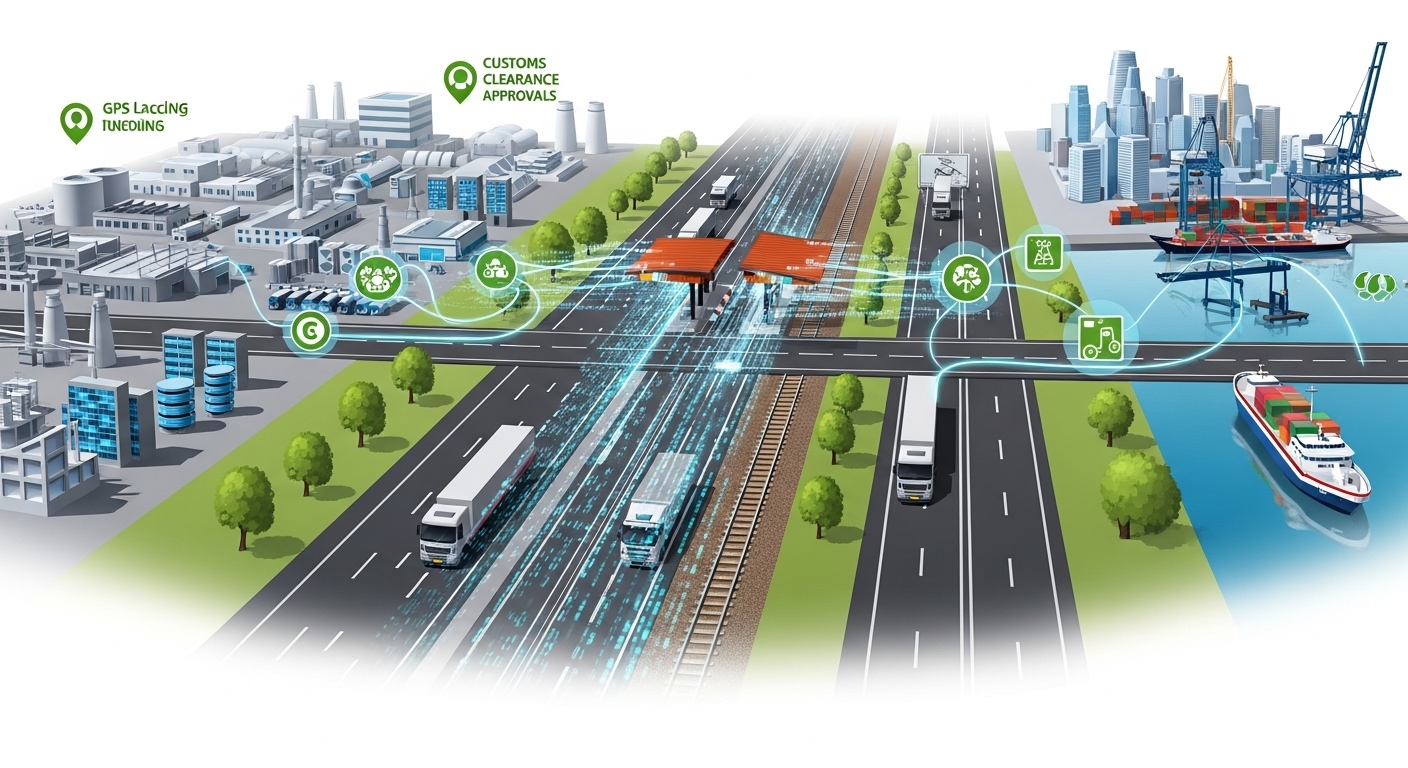
Imagine standing on a bustling border crossing. On one side, a warehouse full of perishable goods waits days for clearance. On the other, a newly planned city struggles to attract business because the logistics links to the port are congested and unreliable. Now, imagine erasing that friction. That is the promise of çbiri.
For policymakers and urban planners, the challenge of linking economic growth with physical infrastructure has always been a game of catch up. We build roads after the traffic jam forms. We negotiate trade deals after the bottlenecks appear. The çbiri framework inverts this model. It is not just a planning tool; it is a strategic approach to spatial planning and logistics networks that treats borders not as barriers, but as seamless interfaces for economic integration.
This guide explains why çbiri is becoming the gold standard for transnational corridors and how you can leverage it to unlock regional stability and prosperity.
The Basics of çbiri: More Than Just Asphalt and Ports
To understand çbiri, you have to stop thinking about infrastructure as physical objects. A road is just concrete. A rail line is just steel. The çbiri framework treats these elements as part of a living circulatory system for the economy.
At its core, çbiri (derived from concepts of “connectivity architecture”) is a holistic governance and design methodology. It synchronizes three critical layers:
- Physical Infrastructure: The actual transport assets (roads, rails, ports, and pipelines).
- Digital Infrastructure: The data and communication networks that allow goods to be tracked and cleared before they arrive.
- Regulatory Infrastructure: The policies and cross-boundary governance agreements that determine how smoothly goods move.
A common misconception is that çbiri is just another term for “building bigger highways.” In reality, it prioritizes interconnectivity over capacity. A six lane highway that stops at a customs bottleneck is less effective than a two lane road integrated with a digital pre clearance system. The goal is throughput, not just output.
Why Traditional Planning Fails the “Last Mile” of Trade
Why do so many infrastructure investment projects look beautiful on paper but fail to deliver economic results? Because they are planned in silos.
A classic example is the Special Economic Zone built far from a logistics hub, or a new port developed without upgrading the rail connectivity to the hinterland. These are failures of spatial planning.
çbiri solves this through multi modal transport thinking. It forces planners to ask a critical question: How does this investment connect to the next mode of transport, the next jurisdiction, and the final consumer?
For developing nations, implementing çbiri is particularly transformative. Instead of piecemeal projects funded by disparate donors, the framework encourages a corridor approach. It links rural agricultural zones directly to urban markets and international gateways, ensuring that the economic benefits of trade are distributed rather than concentrated in coastal capitals.
The Geopolitical Dividend: Stability Through Connectivity
For government stakeholders and international development professionals, the strongest argument for çbiri might not be economic it might be geopolitical.
Regions plagued by instability often suffer from economic isolation. When you build transnational corridors based on the çbiri model, you create interdependence. Countries that trade together, and more importantly, move goods efficiently through each other’s territory, have a vested interest in regional security.
The role of çbiri in regional security cannot be overstated. It transforms borders from militarized zones of contention into commercial zones of cooperation. By aligning logistics networks and standardizing cross border governance, nations build trust. This is the foundation of durable geopolitical stability, turning neighbors into trading partners rather than rivals.
Funding the Future: Selling the Vision to Investors
Pitching an çbiri project to financiers or development banks requires a shift in language. You are not asking for money to build a bridge; you are asking for money to unlock a regional market.
Funding for çbiri projects is increasingly available through blended finance models. Here is how successful proposals frame the investment:
- Risk Mitigation: By including digital transformation and governance harmonization, çbiri projects reduce the political and operational risks that often plague cross-border infrastructure.
- Bankable Corridors: Instead of tolls on a single road, revenue models can include logistics hub fees, data service charges, and increased tax revenue from multiplied trade volume.
- Sustainability: Sustainable çbiri development models emphasize green logistics (like rail over road) and climate resilient infrastructure, which are key priorities for global climate funds.
The table below illustrates how çbiri compares to traditional infrastructure planning in the eyes of an investor.
| Feature | Traditional Infrastructure Planning | The çbiri Framework |
|---|---|---|
| Focus | Asset creation (miles of road) | Outcome generation (velocity of trade) |
| Governance | National, siloed | Cross-boundary, integrated |
| Technology | Optional add on | Core component (digital transformation) |
| Risk Profile | High (political, traffic demand) | Mitigated (systemic resilience) |
| Economic Impact | Localized | Regional integration |
Implementing çbiri: A Roadmap for Planners
If you are an urban planner or a policymaker tasked with implementing this framework, where do you start? It can feel overwhelming to align so many moving parts. Here is a practical, phased approach.
The Institutional Baseline
Before breaking ground, you must break down barriers. Conduct a audit of cross-boundary governance. What are the customs procedures? Where are the data sharing blockages? Implementing çbiri in developing nations often starts not with an engineering firm, but with a roundtable of customs officials and transport ministers.
The Digital Layer
Digital transformation in çbiri is the low cost, high impact win. Invest in single window systems for trade documentation. Use IoT sensors to track cargo in real time. When you make the data flow, the goods will follow.
Targeted Physical Investment
Now, you build. But you build smart. Focus on the “missing links” in the logistics networks. This might be a short rail spur that connects an industrial park to the main line, or the Last Mile road to a warehouse district. Every physical investment must be justified by its ability to close a gap in the integrated network.
The Feedback Loop
çbiri is not a set it and forget it plan. Establish a cross-border infrastructure research initiative that monitors traffic flows, trade volumes, and clearance times. Use this data to continuously tweak the system.
The Future of Trade is Seamless
The cities and regions that will thrive in the next decade are not necessarily the ones with the most resources. They are the ones that move resources the fastest. çbiri offers a blueprint for that velocity.
For academic researchers, it provides a new lens to study economic integration. For urban planners, it offers a logic for sustainable growth. For policymakers, it delivers a tool for peace and prosperity.
The question is no longer whether we should connect our economies. It is whether we have the vision to do it intelligently.
What are the biggest barriers to cross border trade you see in your region? Is it physical infrastructure or regulatory friction? Share your perspective below.\
You May Also Like: Giniä and Wealth Inequality: Why is zero a goal that no one can achieve?
Frequently Asked Questions
What exactly does “çbiri” stand for in practical terms?
In practice, çbiri stands for the integration of physical, digital, and regulatory systems to create seamless transnational corridors. It is a methodology for ensuring that infrastructure investment directly translates into faster trade and stronger regional economic ties.
How does çbiri differ from standard regional development programs?
Standard programs often focus on individual projects within national borders. çbiri emphasizes cross-boundary governance and multi-modal connectivity from the start. It ensures that a road in one country aligns with the rail system and customs procedures of its neighbor, creating a unified logistics network.
Is the çbiri framework only relevant for large, transnational corridors?
No. While it is powerful for large corridors, the principles can be scaled down. Urban planners can use çbiri thinking to connect different districts within a city, linking residential zones to commercial hubs via integrated transport and digital traffic management systems.
What are the main challenges when implementing çbiri in developing nations?
The primary challenges are usually institutional, not technical. These include harmonizing diverse legal systems, building trust between neighboring customs agencies, and securing long-term funding that transcends political election cycles. However, cross-border infrastructure research initiative case studies show that starting with digital pilot projects can build momentum.
How does digital transformation fit into physical infrastructure projects?
Digital transformation acts as the “nervous system” for the physical “bones” of infrastructure. It includes things like cargo tracking systems, automated customs declarations, and port community systems. This digital layer drastically reduces waiting times at borders, maximizing the return on physical investment.
Can çbiri help with environmental sustainability goals?
Absolutely. By optimizing logistics networks and promoting multi-modal transport (like shifting freight from trucks to rail), çbiri reduces carbon emissions. Furthermore, sustainable çbiri development models encourage the building of green infrastructure that is resilient to climate change.
How can my country secure funding for a çbiri project?
Funding usually comes from a mix of sources including national budgets, international development banks (like the World Bank or Asian Development Bank), and private investors through public-private partnerships. Successful funding proposals focus on the çbiri benefits for international trade, showcasing how the project will generate economic returns and reduce regional risks.